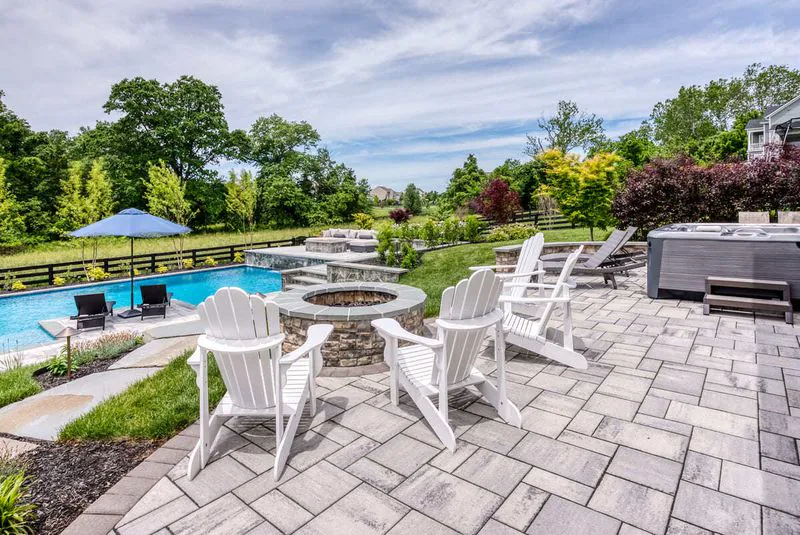
You’re ready to step outside onto your new patio and feel the warmth of the sun or the cool of the morning under your feet.
Transforming your backyard into a beautiful and functional outdoor living space starts with choosing suitable materials for your patio. Two popular options are paver and flagstone patios, each offering unique benefits and aesthetic appeal.
Understanding the differences between these materials can help you make an informed decision that aligns with your style preferences, budget, and practical needs.
What is Flagstone?
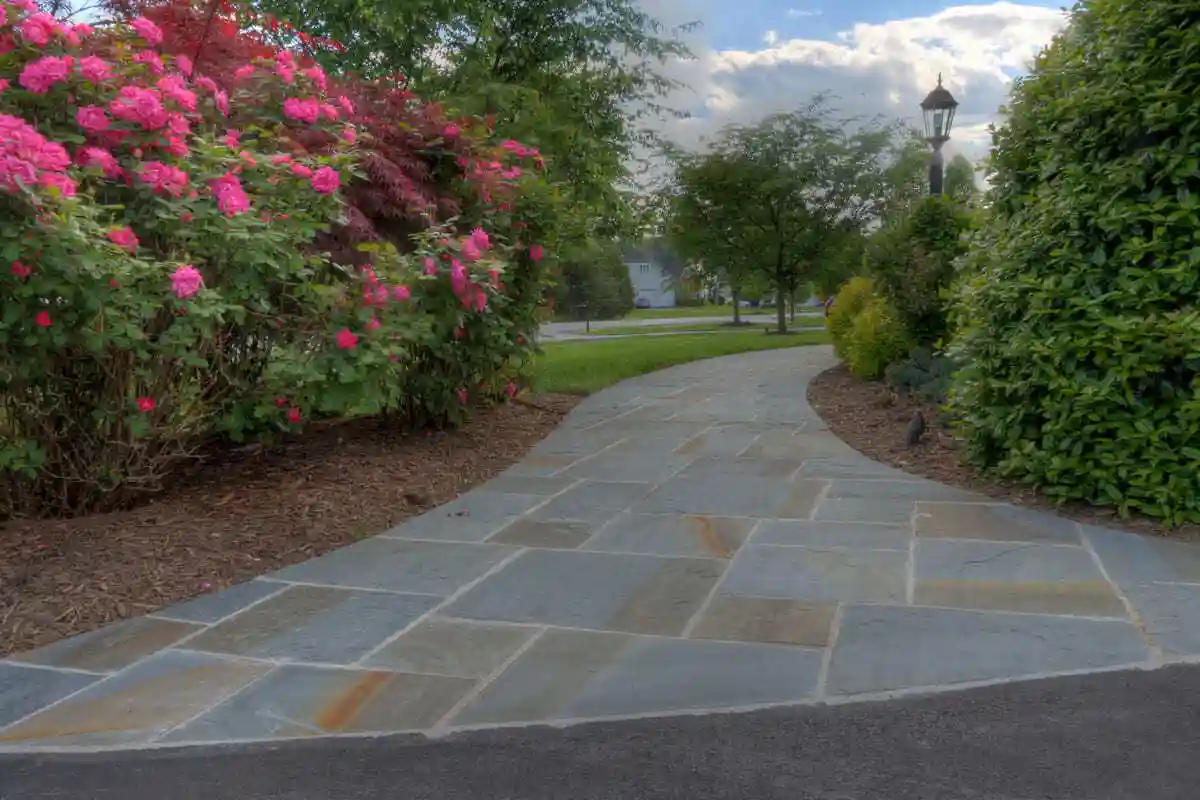
Flagstone is a sedimentary rock split into layers, creating flat, durable pieces ideal for paving. It is renowned for its natural beauty and irregular shapes, which can be used to create unique and beautiful patios.
Types of Flagstone
Sandstone
Known for its earthy tones and smooth texture.
Limestone
Offers a range of colors from light gray to dark blue.
Pennsylvania Bluestone
A regional favorite with blue, gray, and green hues, known for its durability and visual appeal.
Shapes for Flagstone
Slab Stone Patio
Large, flat pieces arranged in a pattern.
Irregular Flagstone Patio
Randomly shaped pieces fitted together like a puzzle, creating a natural, rustic look.
Benefits of Flagstone Patios
Aesthetic Appeal
Flagstone’s natural, earthy tones and unique textures provide a rustic and organic look that complements various landscaping styles.
Durability
Flagstone is a hard, dense material that can withstand heavy foot traffic and harsh weather conditions, ensuring long-lasting beauty and functionality.
Custom Designs
The irregular shapes of flagstone pieces allow for creative and custom patio designs, adding a personalized touch to your outdoor space.
Cooler Surface Temperature
Unlike darker materials, flagstone tends to stay cooler in the sun, making it comfortable to walk on even during hot summer days.
Slip Resistance
Flagstone’s naturally textured surface provides good traction, reducing the risk of slipping when the patio is wet.
Drawbacks of Flagstone Patios
While flagstone patios have many benefits, there are some potential drawbacks to consider:
Higher Cost
Flagstone is typically more expensive than pavers in terms of material and installation costs. The unique and natural look comes at a premium price.
Potential for Uneven Surfaces
If not installed correctly, the irregular shapes of flagstone can create uneven surfaces, which might be a tripping hazard.
Maintenance
Flagstone requires regular maintenance, such as sealing and cleaning, to keep it looking its best and to prevent issues like moss or weed growth between the stones.
What are Pavers?
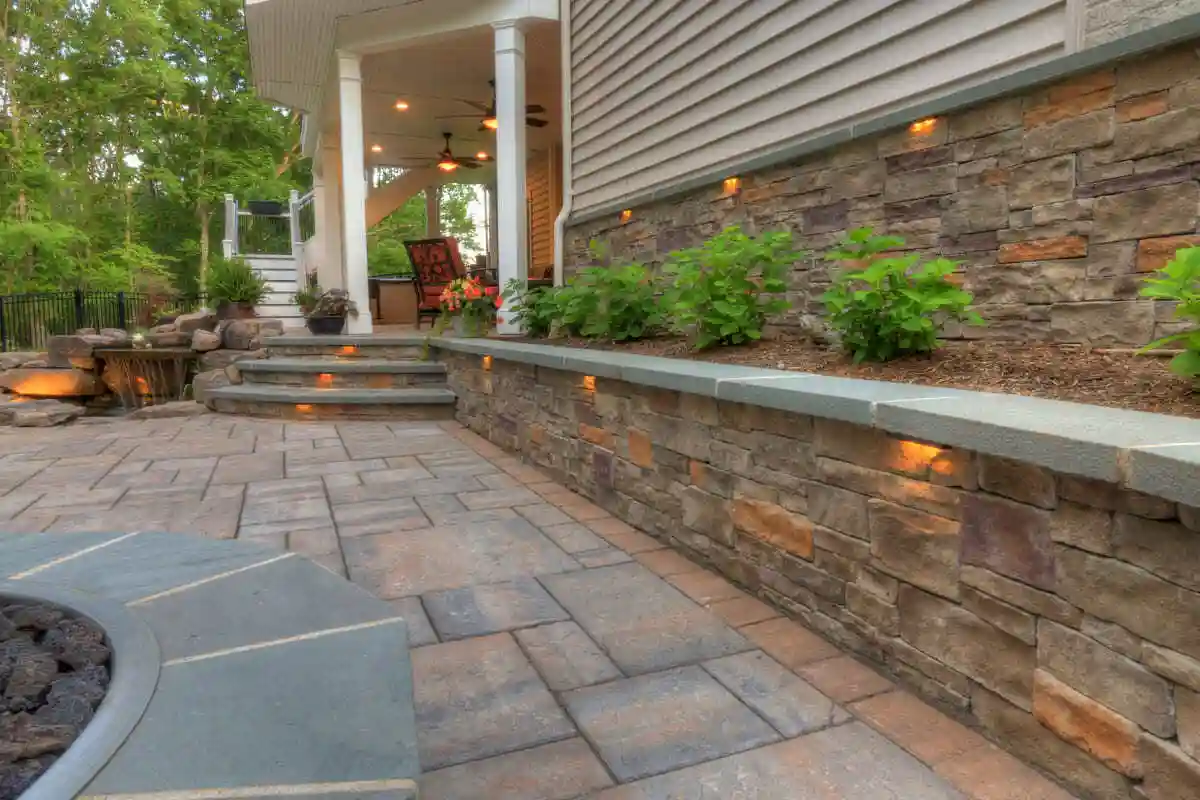
Pavers are typically uniform in shape and size, allowing for precise installation and a clean, polished appearance. They can be used to create various designs, from classic brick patterns to intricate mosaics. Pavers are manufactured stones made from concrete, clay, or natural stone. They come in various shapes, sizes, and colors, making them a versatile option for any patio design. Pavers can mimic the look of natural stone or be crafted into geometric patterns for a more modern aesthetic.
Types of Pavers
Concrete Pavers
Affordable and available in many styles and colors.
Clay Pavers
Known for their rich, natural color that doesn’t fade over time.
Natural Stone Pavers
This category includes granite, slate, travertine, and flagstone, a type of paver offering a more luxurious look.
Benefits of Manufactured Paver Patios
Cost-Effectiveness
Pavers are generally less expensive than flagstone, making them a budget-friendly option for creating a beautiful patio.
Wide Range of Design Options
With a vast array of shapes, sizes, and colors available, pavers can create virtually any design, from classic patterns to contemporary styles.
Ease of Installation
Pavers are often uniform in size and shape, simplifying the installation process and ensuring a smooth, even surface.
Durability
Pavers are strong and resistant to cracking, making them a durable choice for high-traffic areas.
Maintenance
Most concrete or clay pavers are relatively low maintenance and easy to repair. If a paver gets damaged, it can be replaced without disturbing the surrounding area.
Drawbacks of Concrete or Clay Paver Patios
Despite their many benefits, building paver patios also has some downsides.
Heat Retention
Dark-colored pavers can become very hot in direct sunlight, making them uncomfortable to walk on during the summer months.
Potential for Shifting
Pavers can shift over time without a proper base, leading to an uneven surface. Ensuring a solid foundation is crucial for long-term stability.
Less Natural Look
While pavers can mimic the look of natural stone, they may not provide the same organic aesthetic as genuine flagstone.
Choosing between a paver patio and a flagstone patio depends on your budget, aesthetic preferences, and practical needs.
Flagstone Patios
Flagstone Patios offer a natural, rustic look with unique shapes and textures. They are durable and provide good slip resistance, making them safe for wet conditions. However, they come with a higher cost and require regular maintenance to keep them looking their best.
Manufactured Paver Patios
Manufactured Paver Patios are more affordable and versatile, available in various colors, shapes, and sizes. They are easy to install and maintain, but darker pavers can become hot in direct sunlight, and they may shift over time without a proper base.
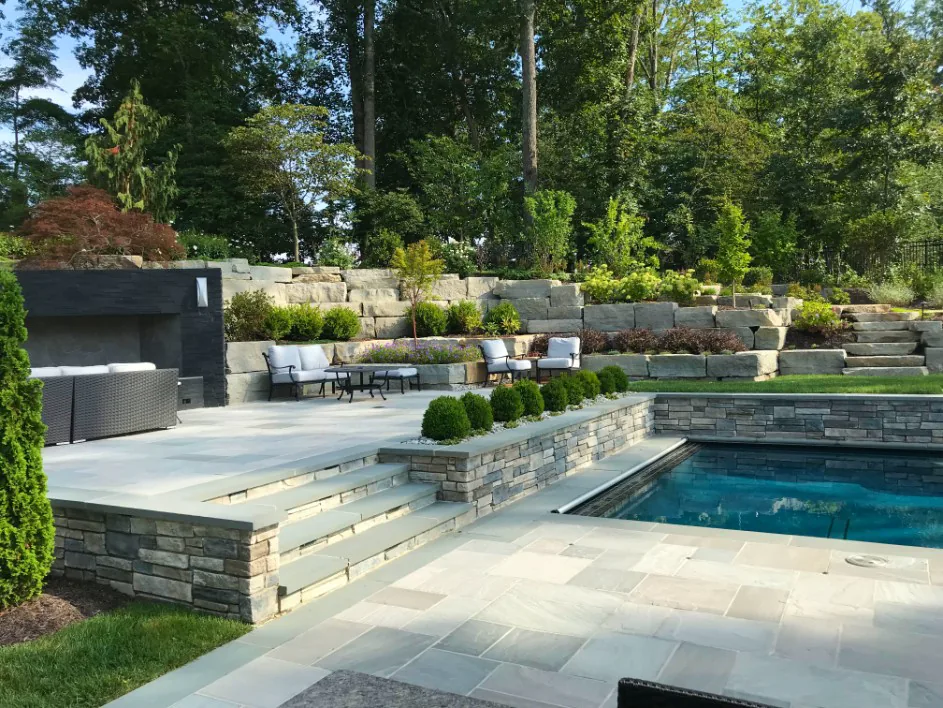
xScape Creates Supreme Patios in Loudoun, Fairfax, and Prince William Counties
At xScape, we specialize in creating beautiful and functional outdoor living spaces tailored to your needs and preferences. Whether you choose flagstone, pavers, or a combination, our expert team guides you.
Ready to transform your backyard into a stunning outdoor oasis?
Contact xScape today for a consultation, and let us help you bring your vision to life.